A Passion for Pale

Photographer: 
Keller + Keller

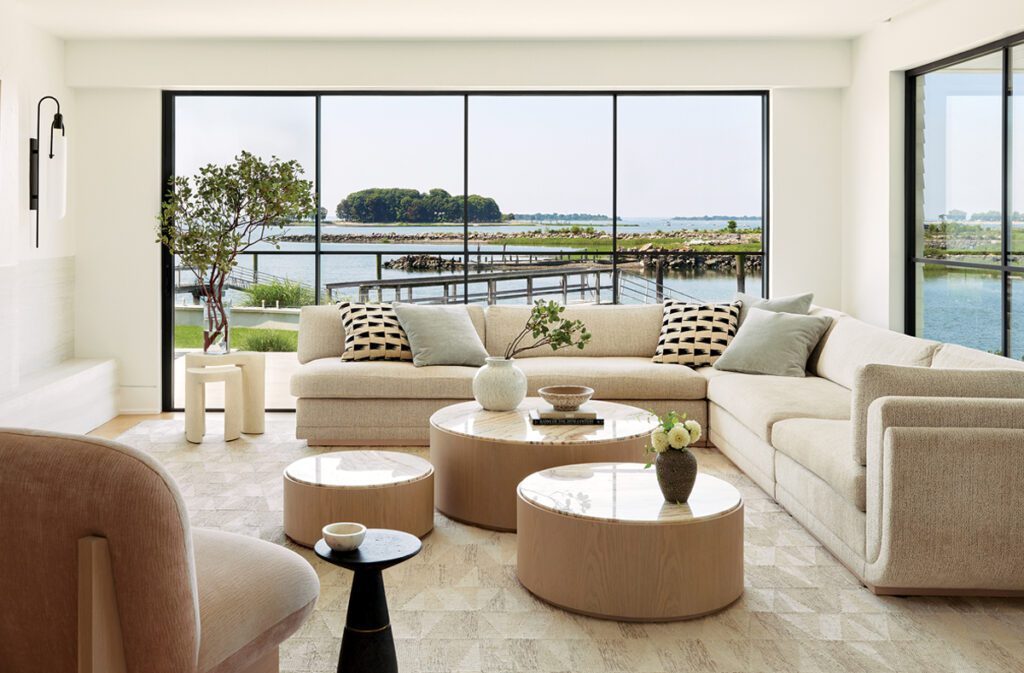
How do you decorate around a drop-dead gorgeous, never-take-your-eyes-off-the-wonder view? Does the decor have to take a back seat? Can the inside sing duets with the outside? “If you keep it white, the view becomes art, framed against a white background,” says David Nault.

Nault, half of the delightfully named downtown Boston design firm Weena & Spook, makes it sound easy, but the all-white room is the historic ne plus ultra of interior design. In the absence of color, we become acutely aware of texture, scale, shade, shape, placement, line, mass, proportion—in other words, everything that composes the decor. Pure museum-white can act as a brilliant foil, but it can also create unforgiving contrast.

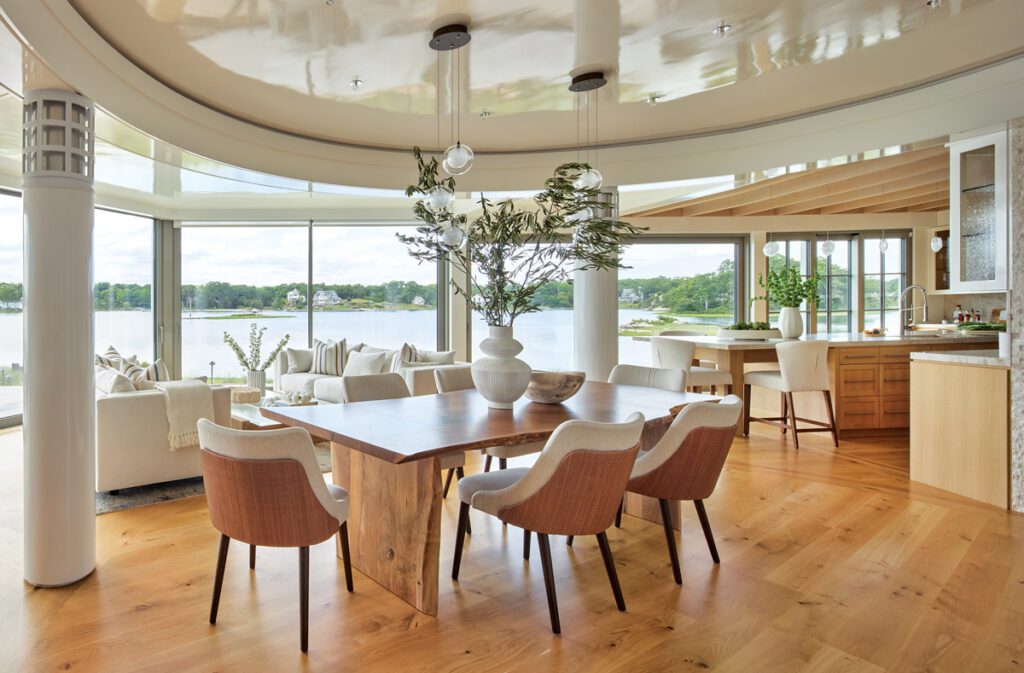
Two years ago Nault and his partner, Paul White, ascended to a whiter shade of pale when they moved into one of the two slender towers I.M. Pei designed for a sadly degraded East India Wharf in 1971. Followed a few decades later by the ornamented, arched mass of Rowes Wharf, Pei’s two minimalist buildings sparked the renaissance of the Boston waterfront; the neighborhood is now surpassingly chic. Nault and White’s fifteenth-floor apartment surely has the city’s best maritime view as it looks down on the harbor. Tankers, freighters, yachts and water taxis inscribe ever-widening chevron wakes over the sparkling water between the buildings of the North End to one side and South Boston to the other, with the emerald hummocks of the Boston Harbor Islands stretching toward the horizon.

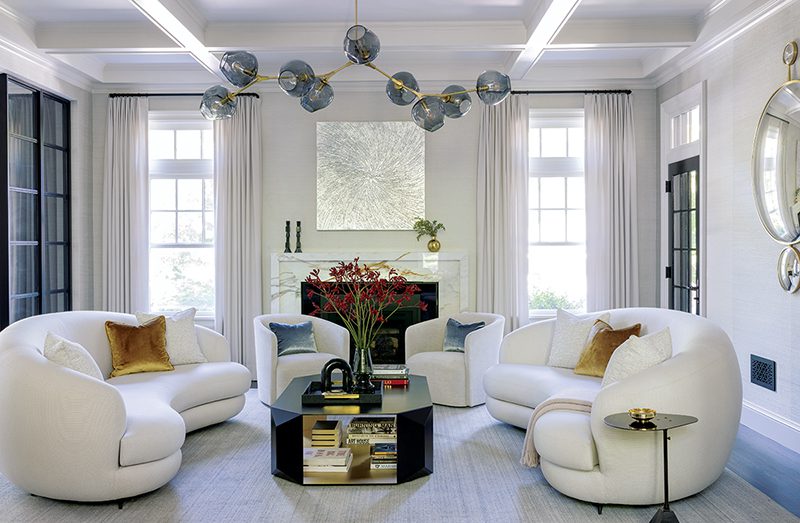
Nault and White (who named their design firm for their cats) transformed their 1,800-square-foot, two-bedroom aerie into a white composition James McNeill Whistler would have envied; Syrie Maugham first attempted just such perfection in 1927. Nault and White’s rooms realize those 100-year-old ideas about the transcendent value of white, but not with insipid, afraid-of-color white or rigidly severe, stark white rooms. Their beautiful, workable interior frames the incomparable view with a pure, Zen-like white palette rendered in voluptuous texture and form. Via carefully edited white furniture, upholstery, walls and draperies accented with almost-colorless neutrals, Nault and White make beloved pieces of art, as well as the view, shine.

The two have honed their demanding aesthetic during seventeen years as interior designers, which followed careers in New York in the world of fashion design. “If you are a great designer, you can design fashion, shoes, interiors—whatever,” Nault explains.

He and White point to other examples of designers who work in several markets. “Renowned Italian fashion houses have been making beautiful leather furniture for years,” White notes.

The pair’s transition from the rag trade to interior design happened organically. “We always lived very beautifully,” Nault says. “We had ideas of how to host, entertain, decorate. At the request of friends while we were still in New York, we began to design and make custom slipcovers with dressmaker construction and detail.”

“I am a great tailor,” White chimes in, beaming.

They left New York for Boston and began to create interiors for residential clients in the city and on the Cape. Weena & Spook rooms are variously hued, revealing the sure use of color the designers developed during years in the fashion industry. For their own home, however, their vision was uncompromising. “We chose this place because it was a nice box, all white,” says Nault. “Our stuff would fit here really well.”

“The kitchen was all done,” his partner adds. “All we had to do was to put up window treatments and bring in furniture.”

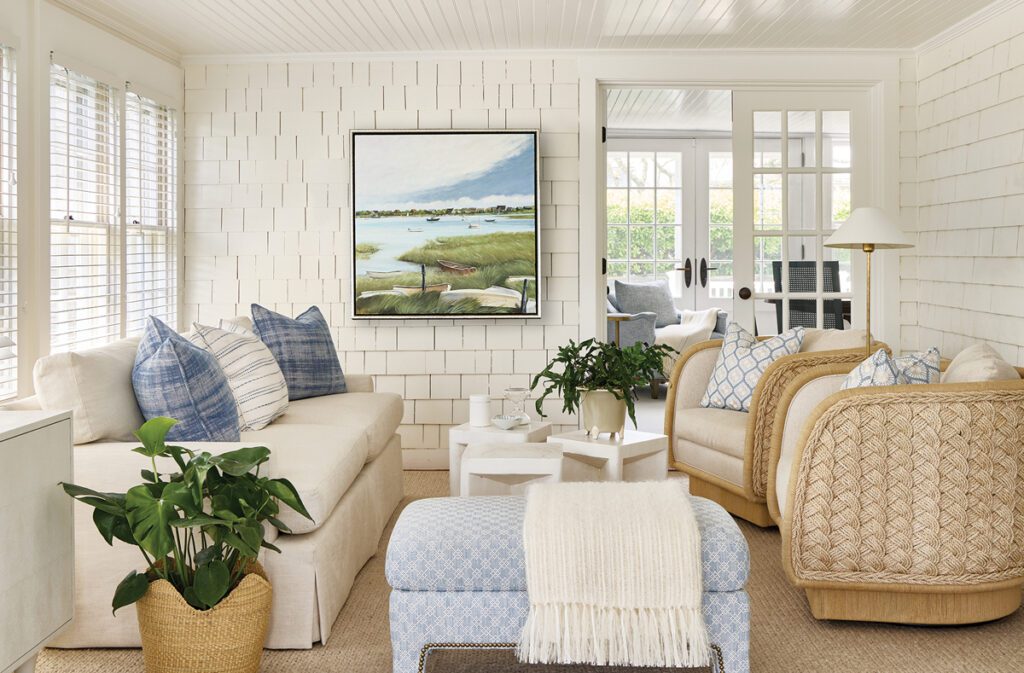
Kitchen, living room and dining room flow into each other before large windows. White cotton duck draperies echo the fabric upholstering sofas, chairs, ottomans, the master bedroom’s headboard and even a prominent section of living room wall. “The upholstery softens the hard wall,” Nault explains. “We are big on rough paired with fine. For example, the slipcovers are rumpled, but the walls are tight. The furniture is composed of pure white in clean shapes, while the end tables are pieces of old Battery Wharf piers.”

“No one worries about putting a drink on them,” his partner says with a laugh.

White expands on their aesthetic. “We like it monochromatic, but we create texture with grasscloth, woven papers, linens, heathery wools—materials that provide subtle contrast and that complicate the play of light.”

He continues, “Make sure you do a white you can clean. That’s why we use slipcovers in white cotton twill; it’s basically denim, a fabric that wears like iron.”

Just as it draws the eye to the brilliant, ever-changing view, white showcases the couple’s favorite pieces of art, including striking contemporary works whose saturated pigments and brushstrokes sing against the clean backgrounds of the walls in the living room and bedroom. Above the master bedroom headboard, a long, horizontal composition by Victoria Wagner encapsulates the serenity and textural contrast of the entire interior.

The designers who have inspired White and Nault may come as no surprise, at least in light of their own living space. “We love Calvin Klein and, for his ability to edit, Giorgio Armani,” says White.

“Also, the European hotelier and designer Anouska Hempel,” Nault adds.

Distinctive as White and Nault’s home looks, Weena & Spook does not have a “signature” style. “Our primary concern is to get the space and the flow right,” says Nault. Still, he adds, “We almost never do prints for clients.”

Although the interiors they create for clients may be more colorful than their own home, the pair understands what Pablo Picasso and John Singer Sargent knew: without white, colors don’t matter. In their design work, they strategically place color to highlight important architecture or to emphasize beautiful elements of a room.

But here in their own home, most of the vibrant, saturated color comes in through the windows. From the moment you open the front door, the whole space communicates a deeply satisfying sense of completion, a complex, perfectly proportioned frame displaying a scene full of color, movement and ever-shifting reflections. “When you deal with other people’s colors all day,” confesses Nault, “it’s restful to come home to white.” •

Interior design: Paul White and David Nault, Weena & Spook

Start the Conversation

Online Design Center Premium